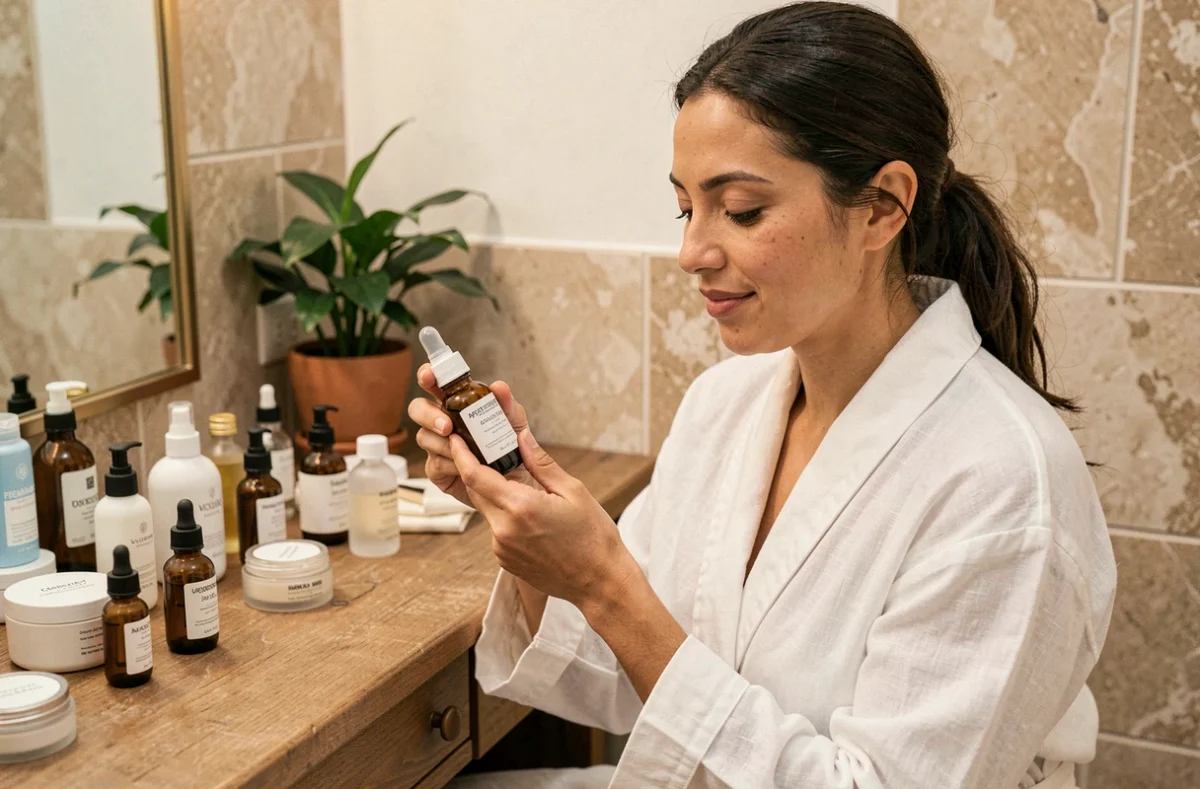
Choosing a skincare product that suits your skin means weighing two factors brands rarely present together: your skin type (oily, dry, combination, sensitive) and the product’s actual ingredients, particularly its fragrance substances.
European regulations now require more fragrance allergens to be individually identified on cosmetic labels, with different thresholds for leave-on and rinse-off products. This changes how you read a package, going well beyond the skin type printed in large letters on the bottle.
Fragrance allergens and marketing claims: what the INCI list really reveals
A claim such as “natural,” “hypoallergenic” or “no added fragrance” does not guarantee that fragrance substances are absent. Essential oils and plant extracts may contain allergenic molecules (linalool, limonene, citronellol) without the packaging making this clear at first glance.
The only reliable way to check is to read the INCI list on the back of the product. As European cosmetics regulations have been progressively strengthened, more individual allergens must be listed whenever their concentration exceeds a certain threshold. For a leave-on product (day cream, serum), the threshold is lower than for a rinse-off product (cleansing gel, shampoo).
A quick comparison of different marketing claims helps show the gap between the promise and the actual contents:
| Claim on the packaging | What it actually means | Guarantees no allergens? |
|---|---|---|
| “Fragrance-free” | No fragrance added for scent | No (plant-based active ingredients may contain them) |
| “Hypoallergenic” | Formulated to reduce the risk of an allergic reaction | No (there is no binding regulatory definition) |
| “Natural” or “Organic” | Ingredients of natural origin / from organic farming | No (essential oils are common allergens) |
| “Dermatologically tested” | A dermatologist supervised tolerance testing | No (testing protocols and participants vary) |
This table shows that none of these claims replaces checking the INCI list. For anyone with sensitive skin who wants a pleasantly scented skincare product, several resources provide detailed information on ingredients and suitable formulations, including the Beauté en Folie website, which offers guides tailored to different skin types.
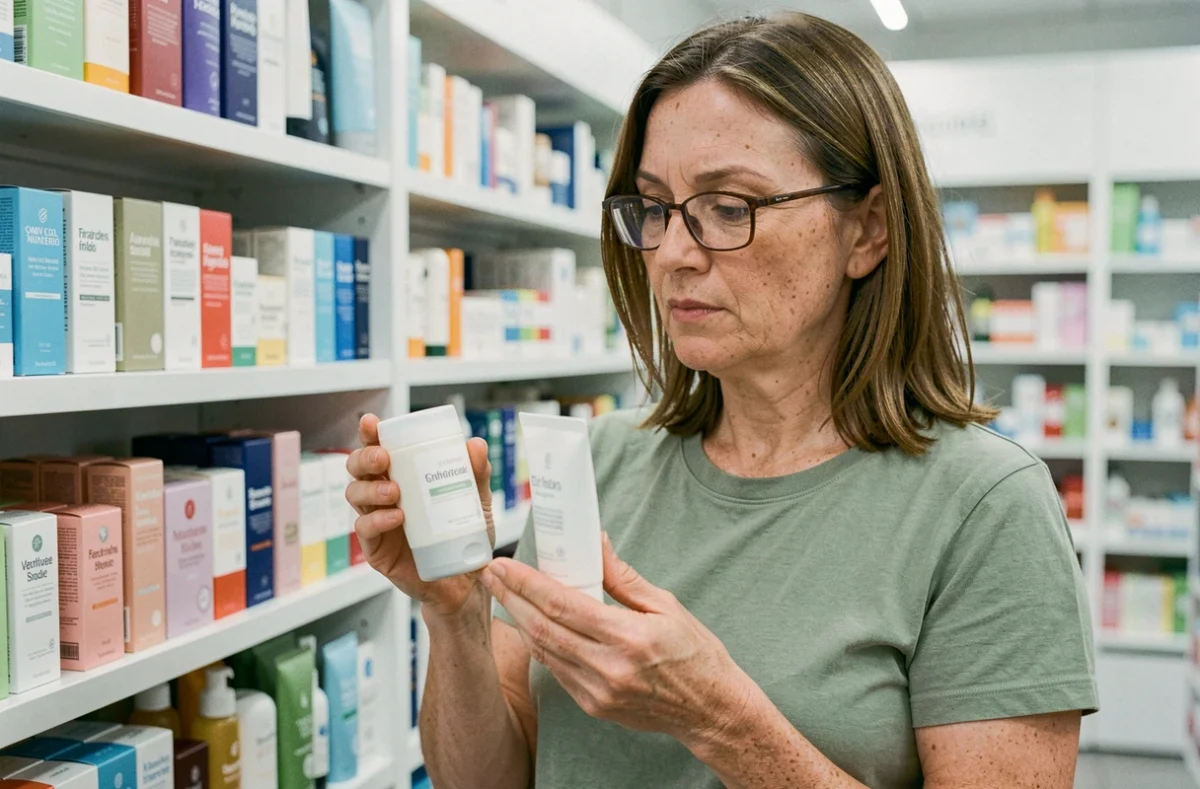
Sensitive skin and sensory pleasure: finding the balance through patch testing
Giving up all scented products when you have sensitive skin means confusing caution with deprivation. The key is to test the product before adding it to your routine.
The American Academy of Dermatology recommends testing a new skincare product on a small area of skin twice a day for seven to ten days before using it regularly. This gives you time to detect a delayed reaction, which is common with contact allergens.
In practice, apply the product to the inside of your forearm or behind your ear. If no redness, itching or tightness appears during this period, the product is likely to be tolerated on your face. A persistent or unexplained reaction warrants a consultation and allergy patch testing supervised by a healthcare professional.
How to choose a scented skincare product without taking unnecessary risks
- Check the INCI list for individual allergens (such as linalool, geraniol and citral), rather than relying only on the word “parfum” or “fragrance”
- Choose rinse-off products (cleansing gel, mask) to enjoy a scented note while reducing the time it stays in contact with your skin
- Keep the packaging and product reference: in France, consumers can report adverse effects from cosmetics, and this information is needed to do so
- Distinguish between an ingredient’s concentration and its nature: a skincare product containing a small amount of linalool from lavender essential oil is not comparable to a concentrated perfume applied directly to the skin
How to choose facial skincare: look beyond skin type
Most beauty guides organize product choices around four categories (oily, dry, combination and normal skin). This is a useful starting point, but it overlooks several factors that affect a product’s tolerability and everyday effectiveness.
Texture matters as much as active ingredients
A water-based serum penetrates differently from a rich cream. Texture determines how much of an active ingredient stays in contact with the skin and for how long. Sensitive, oily skin may tolerate an active ingredient in a lightweight gel but react poorly to it in a thick emulsion.
A product’s pH also plays a role. High-pH cleansers weaken the skin barrier, increasing allergen penetration during the next step (serum, cream). Choosing a cleanser with a pH close to that of the skin (around 5.5) reduces this risk.
Sun protection: SPF alone is not enough
The SPF rating alone only covers UVB rays. European recommendations require a minimum level of UVA protection in relation to the SPF shown. Look for the UVA logo inside a circle on the packaging. The same recommendations advise against claims suggesting “total protection,” since no sunscreen blocks all radiation.
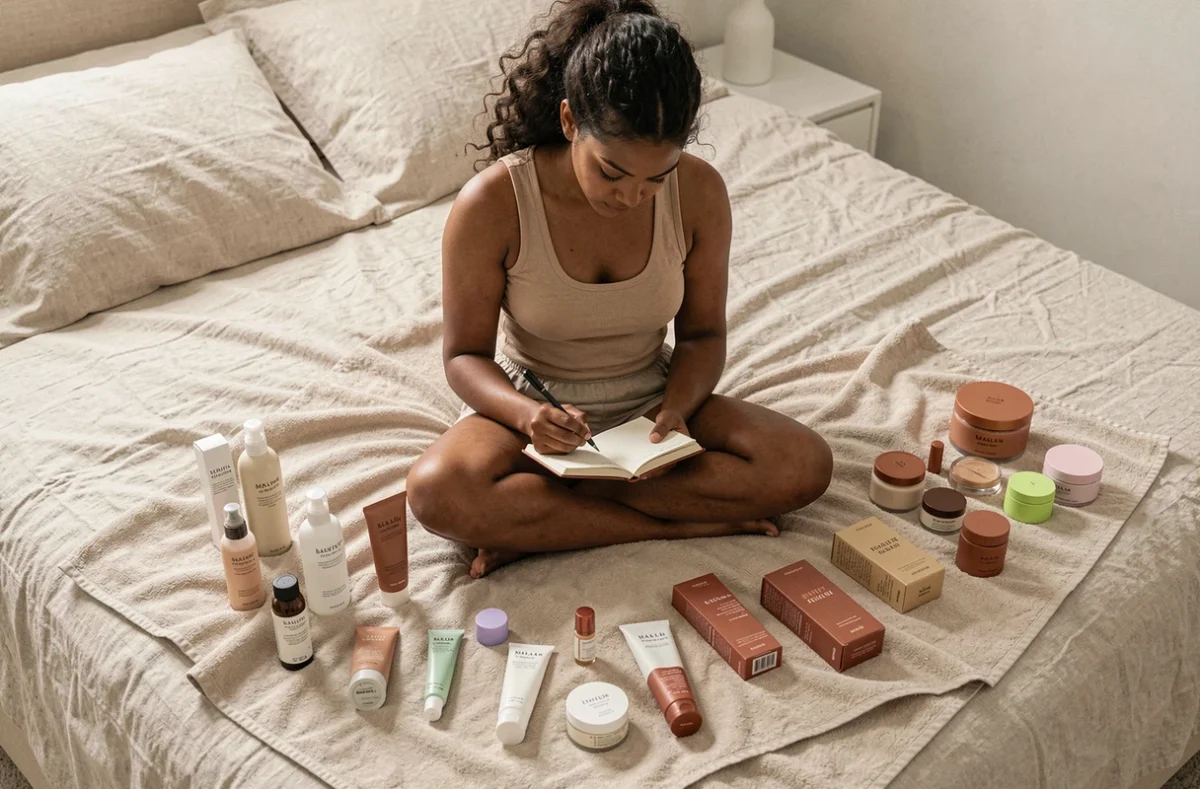
Build a skincare routine without piling on products
Adding more steps (double cleansing, toner, essence, serum, cream, oil, SPF) does not guarantee better results. Every additional layer increases the risk of ingredients interacting and the likelihood of a reaction on sensitive skin.
Three steps are enough for a functional facial skincare routine: gentle cleansing with a suitable pH, targeted moisturizing or treatment, and sun protection in the morning. The rest (masks, exfoliants, concentrated serums) can be added occasionally, following the seven-to-ten-day testing protocol for each new product.
- A gentle cleanser without harsh sulfates that does not leave your skin feeling tight after rinsing
- A moisturizer suited to the season (a lightweight texture in summer, a richer one in winter), with the INCI list checked if your skin is sensitive
- A sunscreen bearing the UVA logo inside a circle, applied generously and reapplied during prolonged sun exposure
A fourth product is only warranted for a specific concern (dark spots, acne, established wrinkles) and after your basic routine has stabilized. Three well-tolerated products are better than six that cancel each other out or irritate your skin when layered.
Choosing a skincare product depends less on the promises on the packaging than on reading the INCI list and taking the time to patch test. Stricter fragrance-allergen labeling requirements give consumers a practical way to balance sensory pleasure with skin tolerance—provided they take the time to turn the bottle around.