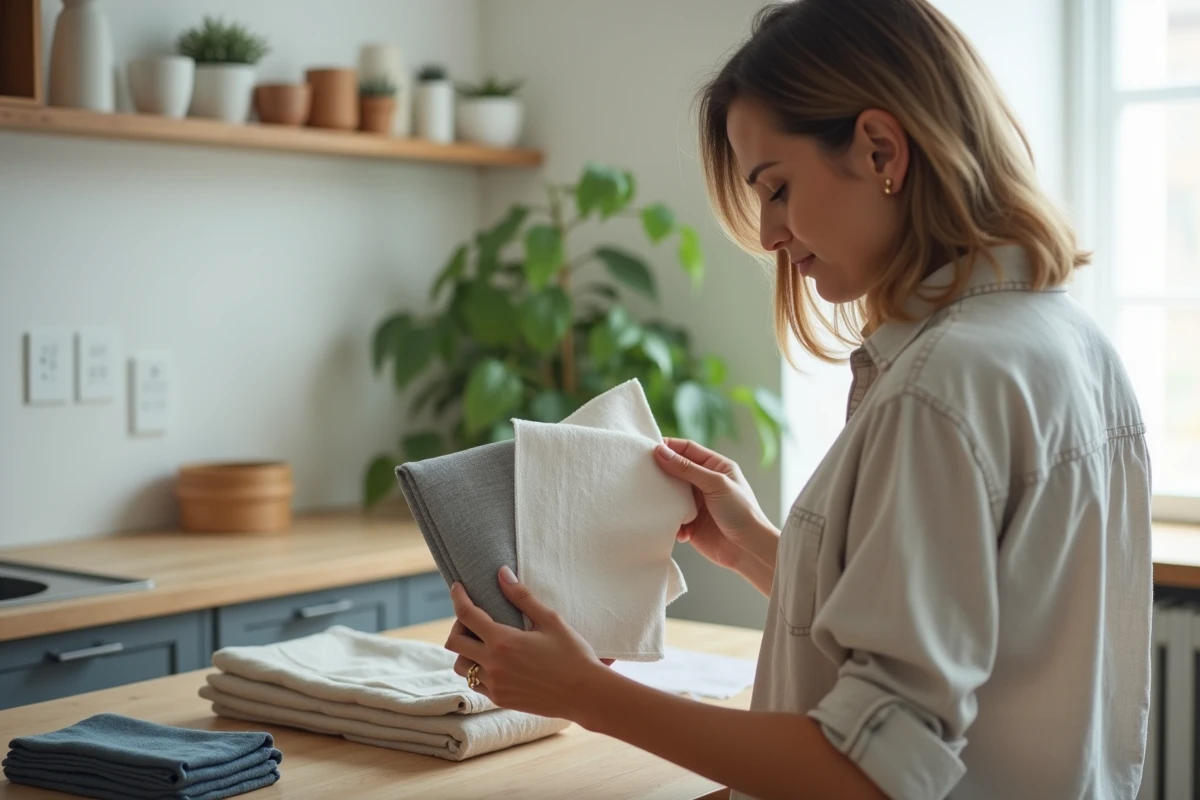
Some fabrics lose their strength after a few washes, while others gain flexibility without sacrificing durability. Linen absorbs moisture but wrinkles quickly, while cotton combines comfort and ease of care, provided you choose a good weave density. Synthetic blends offer increased stain protection, but their breathability remains limited.
Professional uses often impose criteria of durability and safety that exclude overly delicate materials. Conversely, a choice oriented towards elegance prioritizes texture and drape, even at the expense of robustness.
Why the choice of fabric influences the elegance and practicality of a Japanese apron
The loose silhouette and crossed straps of the Japanese apron require a fabric that meets the standard: supple, structured, and capable of following every movement while maintaining presence. This is not just a matter of comfort, but of overall harmony. A washed linen, dense yet soft, recalls the authenticity of artisanal workshops. In contrast, combed cotton, with its matte and even touch, brings a light modernity, ideal for those who prefer minimalistic style. The nature of the textile sets the tone for the garment and determines its resistance to the rigors of washing.
Forgetting the harmony between material and use means the apron loses all its appeal: too light, it wrinkles or collapses; too rigid, it constricts and hinders movement. Weave, thread density, fiber nature—every detail matters for the piece to age well, resist stains, dry quickly, and remain pleasant against the skin.
The very design of the Japanese apron imposes this level of expectation. The fabric must withstand the test of time while retaining enough flexibility to avoid stiffening the silhouette. It is this delicate balance between functionality, comfort, and visual appeal that allows the simplest garment to earn its nobility.
Which fabrics to prioritize for a Japanese apron according to use: kitchen, garden, workshop
Choosing a fabric for a Japanese apron primarily depends on its intended use. In the kitchen, reliability and true ease of care are paramount. For this, thick cotton canvas, especially bachette, are among the top options: their strength reassures with every wash, and their absorbency protects against splashes. Lighter poplin maintains a nice shape without sacrificing elegance, for those who prefer discretion over extreme robustness.
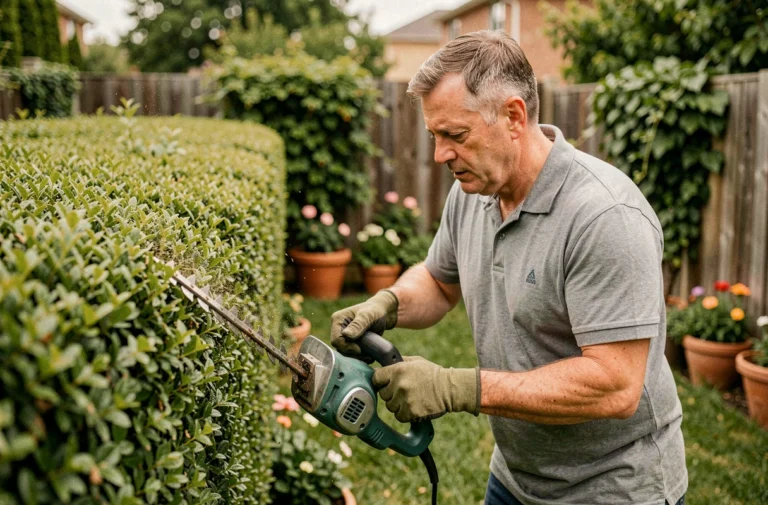
Needs shift in the garden: gabardine or denim become ideal allies. Their tight weave acts as a barrier against scratches and dirt, while their sturdy construction prolongs the life of your gear, even in contact with rain. Linen, valued for its coolness, shines in the sun and adds a natural touch, perfect for gardening as well as showcasing a relaxed style.
In the workshop, durability takes precedence. Twill or denim rise to the challenge: they allow for ample movement and protect against abrasions and tools. Those who enjoy blending tradition with technicality can opt for burlington, a mix of modern and natural fibers, or even add a touch of faux leather to the front to tackle stains and messy work.
These elements provide a clear vision of the best choices for each context:
- Kitchen: thick cotton, bachette, poplin
- Garden: gabardine, denim, linen
- Workshop: twill, denim, burlington, faux leather
For those who wish to delve deeper into the thought process, the article how to choose the fabric for your Japanese apron will guide you towards the perfect match between use, material, and style.
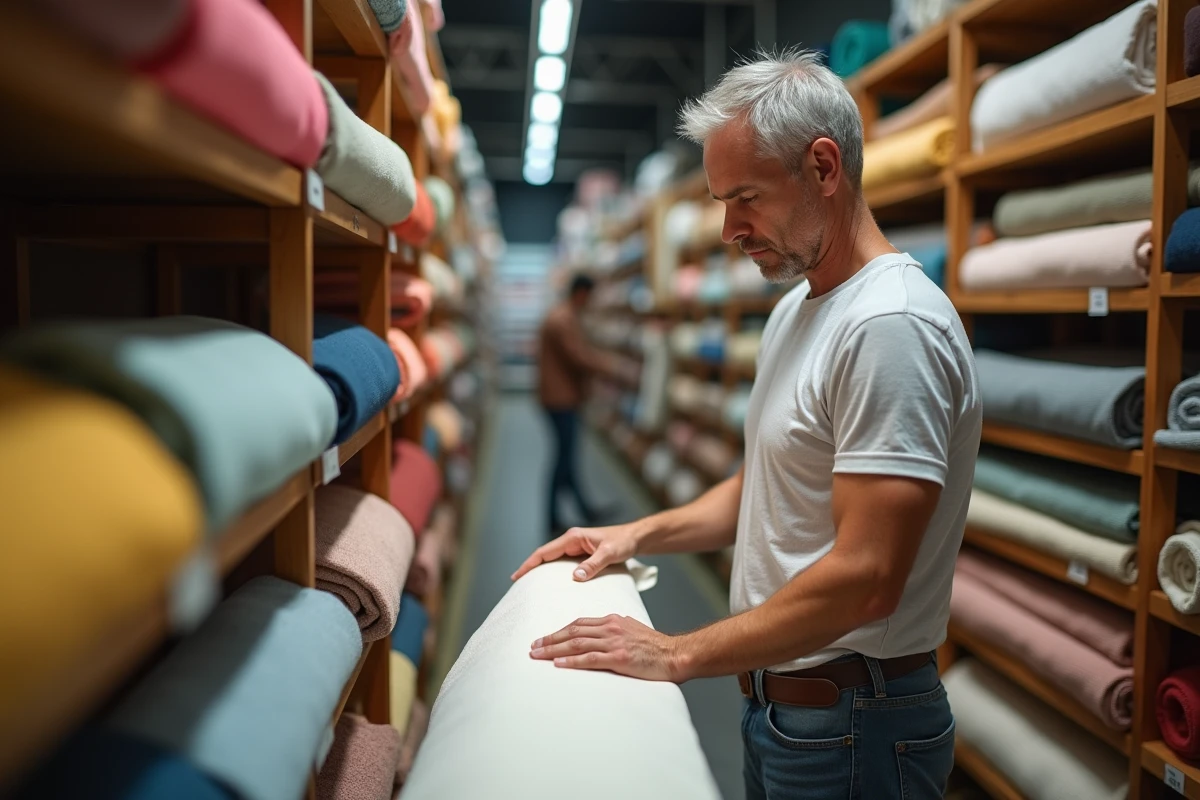
Focus on the essential criteria for selecting the ideal fabric and successfully crafting it
The success of a Japanese apron begins with the choice of fabric. It is about finding the right balance: a fabric that remains supple while retaining its shape, easy to work with without distorting, and dense enough to support the crossed lines of the pattern without weighing down the whole.
To make the right choice, certain parameters must not be overlooked:
- Weight: aiming for a density around 200 to 300 g/m² ensures impeccable hold and comfort when worn.
- Ease of care: washed cotton or pre-washed linen, both machine washable at high temperatures, hold up well without excessive wrinkling.
- Texture: it is better to have a soft fabric, pleasant to the touch, that does not irritate the skin even during long sessions in the kitchen or at the workbench.
For the sewing phase, the fabric should lend itself to the attachment of crossed straps and allow for the addition of practical pockets, a real plus for customizing the piece. Carefully prepare each step: precise ironing, overlocked edges for a clean finish, and sewing tests on scraps will yield optimal results. Discreet fastenings, fine linings, or inserts also contribute to durability and functional detail. A robust thread and strong seams will further add character to your piece.
Ultimately, a well-chosen fabric transforms a simple apron into a faithful companion. It accompanies every gesture, withstands the seasons without losing its silhouette, and imparts to each use that understated elegance that only the best materials possess.