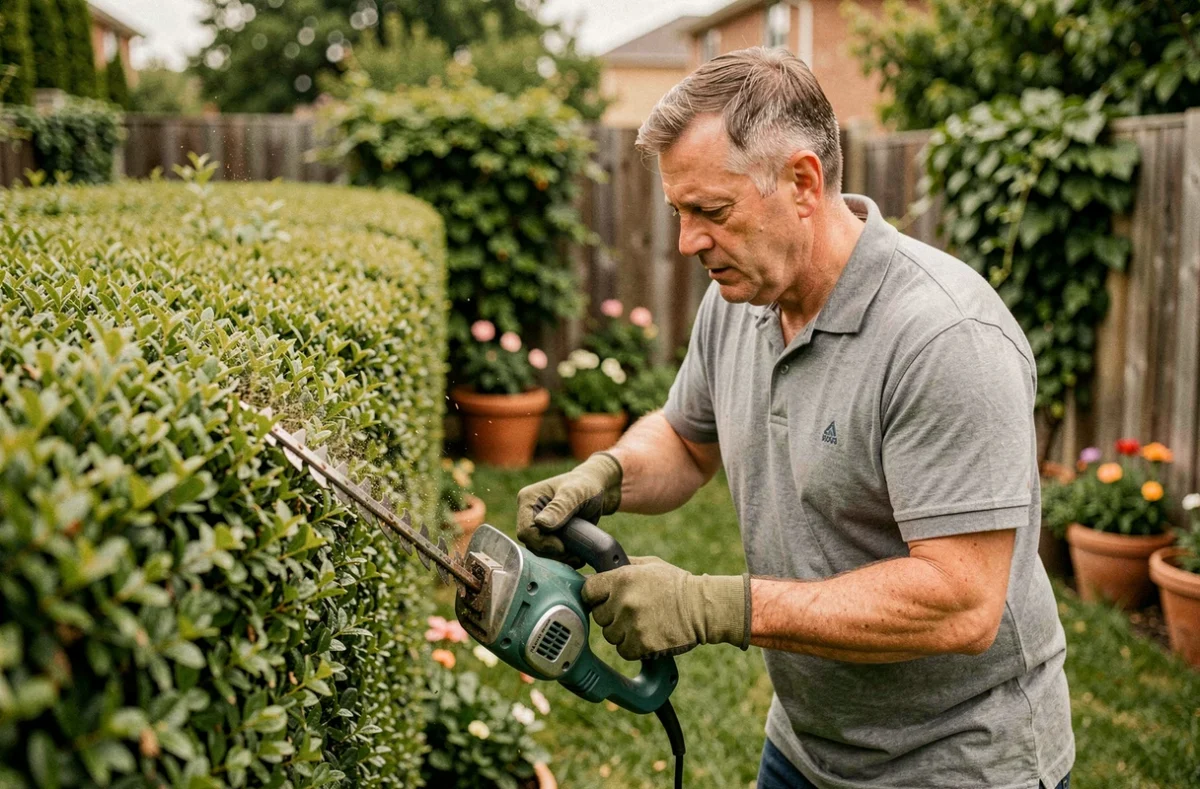
An electric hedge trimmer operates by shearing: two toothed blades slide against each other to cut through branches. Choosing a suitable model depends on several specific technical parameters, related to both the hedge and the conditions of use.
Blade Tooth Spacing and Cutting Diameter: A Criterion That Power Alone Does Not Summarize
Most selection guides highlight the power of the motor. It matters, but it is the spacing of the blade teeth that determines the maximum diameter of branches that the device can cleanly shear.
A narrow spacing is suitable for young hedges, topiaries, and shrubs with fine foliage. For an old and dense hedge with woody branches, a wider spacing is necessary to avoid clogging or tearing cuts.
Before comparing technical specifications, measure the average diameter of the thickest branches in your hedge. This figure directly guides you to the right category of device, much more than the power displayed in watts. The resources available on taille-haie-electrique.com allow you to cross-reference these parameters according to the models on the market.
Length of the Blade of an Electric Hedge Trimmer: Adapting the Cut to the Hedge
The length of the blade influences the speed of work and the uniformity of the cut. A short blade offers more maneuverability for shaped forms or small hedges. A long blade covers more surface area with each pass and facilitates achieving a straight cutting plane over a long length.
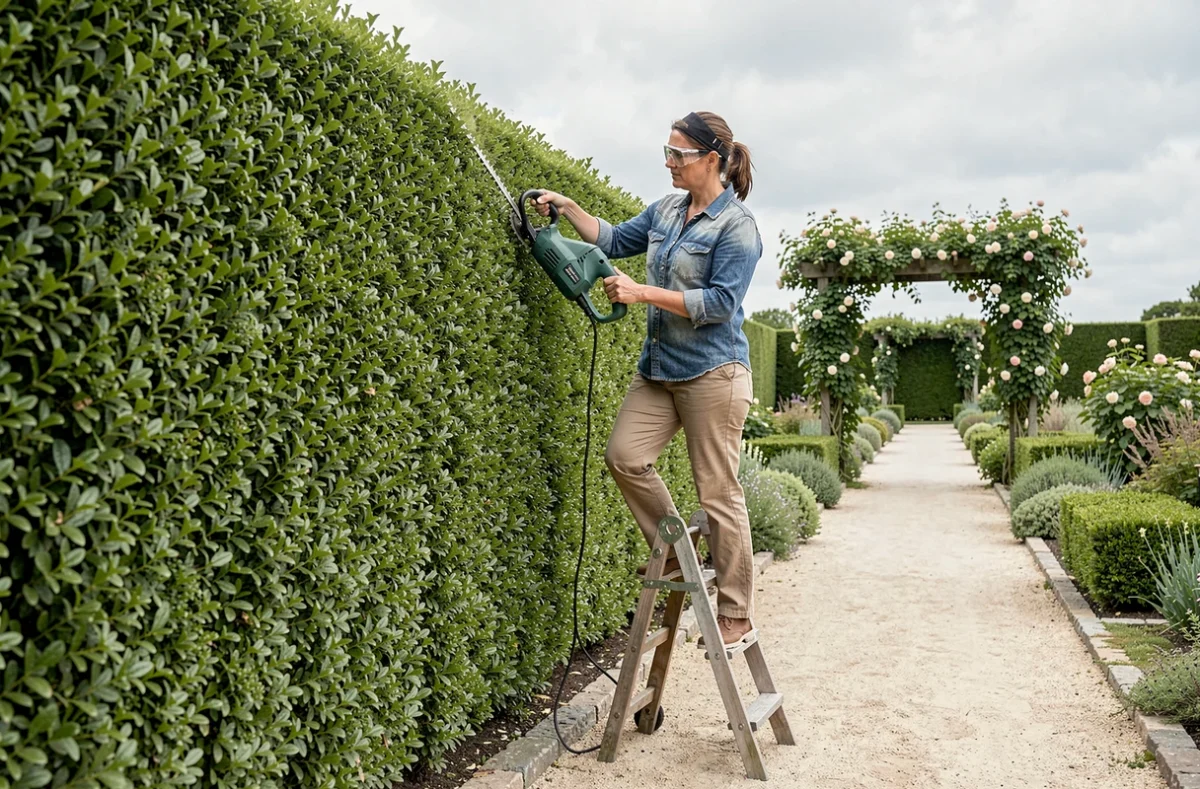
The choice also depends on the width of the hedge. On a narrow subject, a long blade becomes cumbersome. On a deep hedge, a blade that is too short requires multiple passes, which tires and degrades the sharpness of the result.
Prefer a blade slightly longer than the width of your hedge to be able to work in a single horizontal pass. This point is often overlooked in favor of the weight issue alone.
Wired or Battery: Autonomy, Weight, and Repairability
The wired electric hedge trimmer remains plugged into the mains via an extension cord. The cordless model features a rechargeable battery, usually lithium-ion.
- The wired option offers constant power without time limits, but the extension restricts the working radius and can hinder maneuverability around the hedge.
- The battery model frees movements and simplifies work at height or at the end of the garden, at the cost of limited autonomy and often higher weight.
- For a modest-sized garden with an accessible outlet, the wired option remains the simplest choice. Once the hedge exceeds a certain length or is far from any outlet, the battery becomes more practical.
A rarely discussed point: the repairability of the battery determines the actual lifespan of the device. The European regulation on batteries gradually strengthens requirements for traceability, collection, and recycling. Before purchasing a cordless model, check the future availability of replacement batteries, chargers, and spare parts from the manufacturer. A device whose battery is no longer available after a few years becomes unusable.
Weight and Ergonomics of the Hedge Trimmer: Reducing Fatigue During Long Sessions
The hedge trimmer is held and manipulated at arm’s length, often at height. The total weight in working order (including the battery for cordless models) is a determining factor, especially for tall hedges or sessions lasting more than half an hour.
Ergonomics is not just about weight. The position of the handles, the presence of a rotating handle, and the overall balance of the device influence the precision of the gesture and muscle fatigue.
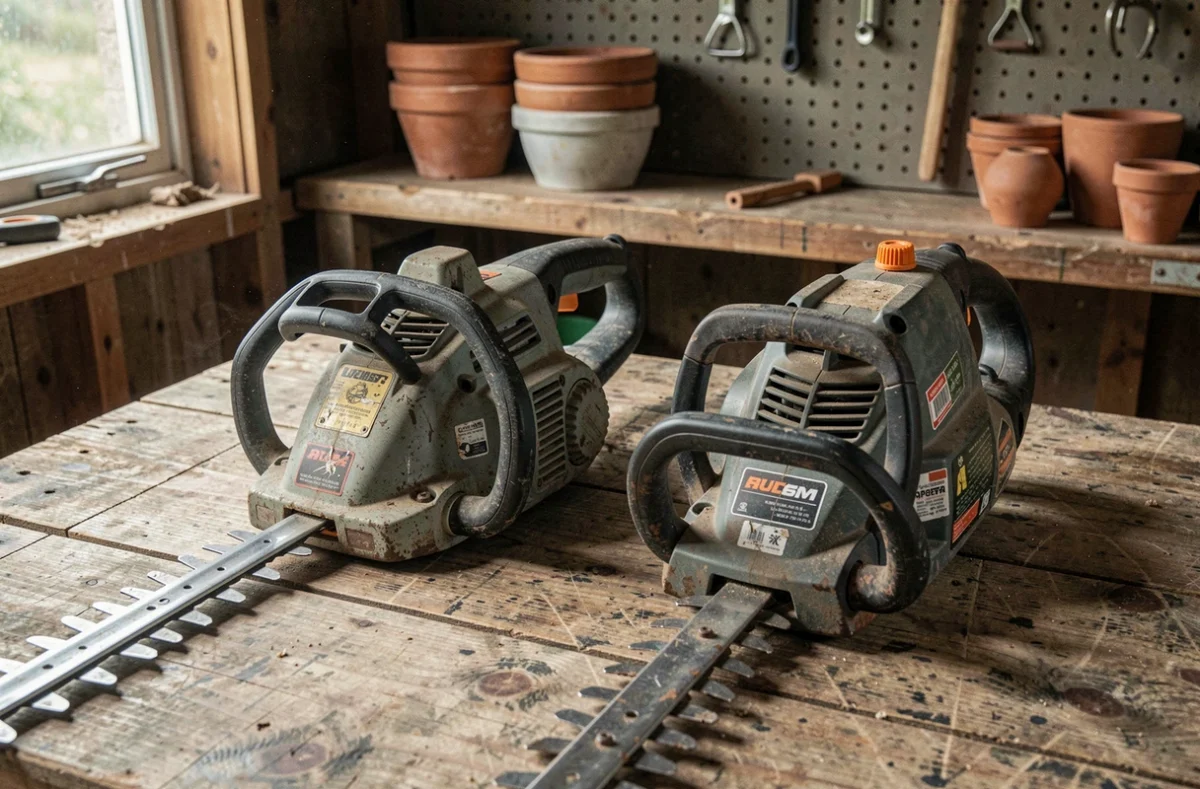
Some concrete guidelines for evaluating ergonomics in-store or by comparing specifications:
- Check that the rear handle allows for a natural grip without wrist twisting.
- If the model has a pivoting handle, test the rotation: it facilitates vertical cutting on the sides of the hedge.
- Compare the weight of models with equivalent blades, with the battery mounted. A difference of a few hundred grams is noticeably felt after a quarter of an hour of work with arms raised.
Trimming Period and Gardener’s Responsibility
The choice of device does not exempt you from considering the calendar. Destroying a nest or brood of a protected species is prohibited regardless of the date. The French Office for Biodiversity and the LPO recommend avoiding significant trimming between mid-March and the end of summer, during the nesting period.
Rules vary by territory. A prefectural or municipal decree may impose additional restrictions. Before planning the first trim of the season, check the applicable provisions in your municipality.
The noise level of the device also comes into play: the authorized hours for using motorized gardening tools are set locally. An electric model, whether wired or battery-operated, generally produces less noise than a gas model, which expands the possible usage slots without neighborhood conflicts.
The right electric hedge trimmer is the one that matches the diameter of your branches, the geometry of your hedge, and your ability to carry it over the duration of the session. Checking the availability of parts and batteries before purchase protects the investment over several seasons.