Choosing a motorcycle after 60 means weighing three parameters that vary in importance depending on the rider’s profile: seat height, weight fully fueled, and the level of built-in electronic aids. Articles on the subject often focus on categories (trail, touring, custom), but rarely on measurable data that allows for objective comparison of models. Yet, this is where real daily comfort is determined.
Seat Height, Weight, and Electronic Aids: Comparative Table by Senior Motorcycle Category
Three families of motorcycles consistently appear in recommendations for senior riders: touring trails, mid-range roadsters, and comfortable GTs. Their characteristics differ based on the criteria that matter most after 60.
| Category | Typical Seat Height | Average Weight Fully Fueled | ABS / Traction Control | Advanced Aids |
|---|---|---|---|---|
| Touring Trail (e.g., Honda NT1100) | Medium-High | Heavy | Yes, standard | Adaptive cruise control, cornering lights on some models |
| Mid-Range Roadster (e.g., Kawasaki Z650) | Low to Medium | Moderate | Yes, standard | Rarely |
| GT / Touring (e.g., BMW R 1250 RT) | Medium, adjustable | Heavy | Yes, standard | Adaptive cruise control, blind spot monitoring, semi-active suspension |
The mid-range roadster offers the lightest weight and the lowest seat, two advantages for frequent stops in the city or on country roads. However, it provides little wind protection and rarely features advanced electronic aids.
High-end GTs concentrate the maximum amount of technology, but their heavy weight complicates low-speed maneuvers. For a rider whose strength in their arms or legs has diminished, moving the motorcycle in a sloped parking lot becomes a significant physical challenge.
Those looking to find out which motorcycle is best for those over 60 should cross-reference this data with their own size and the type of trips planned before focusing on a brand.
Recent Electronic Aids: What Really Changes Motorcycle Safety After 60
ABS and traction control have become the norm on almost all new motorcycles. This safety baseline no longer differentiates models. What now separates them are the next-generation aids that have appeared since 2023-2024 on mid-range motorcycles.
Adaptive cruise control, previously reserved for large GTs, is now available on some accessible touring trails. This system automatically adjusts the distance to the vehicle in front, reducing cognitive fatigue on highways or fast roads.
Blind spot monitoring and adaptive cornering lights address a concrete issue for senior riders: reduced cervical mobility makes blind spot checks more difficult. A sensor that alerts the rider to a vehicle in the blind spot partially compensates for this loss of flexibility.
Cognitive Fatigue and Long Trips
On a journey lasting several hours, the mental load associated with traffic monitoring accumulates more quickly with age. Electronic aids do not replace vigilance, but they reduce the number of micro-decisions per minute. The difference is especially noticeable at the end of the day when concentration wanes.
Connected Apps and Fall Detection: An Underestimated Safety Supplement
Beyond the choice of the motorcycle itself, the safety ecosystem surrounding the rider has evolved. French insurers like Matmut now offer applications like Liberty Rider, often included in the motorcycle insurance contract.
These applications provide three useful functions for senior riders:
- Automatic fall detection via the smartphone’s accelerometer, with alerts to emergency services if the rider does not respond within a defined time
- Real-time trip tracking, accessible by a loved one, which reassures partners during solo outings
- Integrated maintenance log, with service reminders, preventing forgetfulness for a motorcycle used seasonally
For a rider who travels alone on secondary roads, fall detection represents a concrete safety net. A fall without a witness, even at low speed, can become serious if help is delayed.
Senior Motorcycle Maneuverability Criteria: What the Technical Sheet Doesn’t Say
The technical sheet indicates weight, seat height, and power. It says nothing about the weight distribution or the handlebar width at the grips.
A trail with a high center of gravity will be more difficult to recover from a balance issue when stopped than a roadster of comparable weight but with a low center of gravity. The riding position also plays a role: a wide handlebar requires more effort from the shoulders, which accelerates fatigue on winding roads.
Test Ride at the Dealership: Points to Check
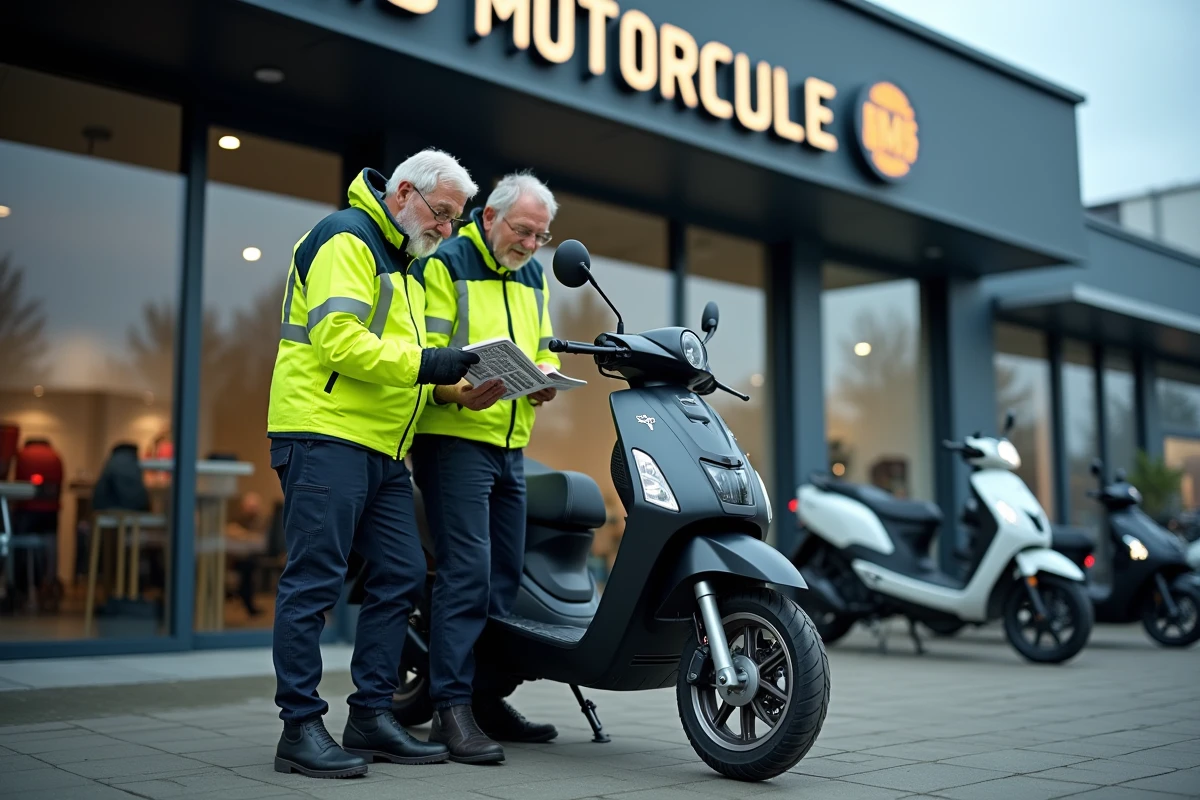
Having both feet flat on the ground is not enough. You should test the U-turn maneuver in a parking lot, including the center stand if the motorcycle has one. Raising the motorcycle from its side stand without excessive effort remains the most telling test of the fit between the rider’s size and the model.
The position of the controls (brake and clutch levers adjustable in span) also deserves checking. Hands less supple than at 30 tire quickly with levers that are too far away or too stiff.
Choosing a motorcycle after 60 rarely boils down to an ideal category. A lightweight roadster will suit the urban rider who prioritizes maneuverability. A GT loaded with electronic aids will be more suitable for long trips. In both cases, it is the physical test ride at the dealership, not the technical sheet, that makes the final decision.