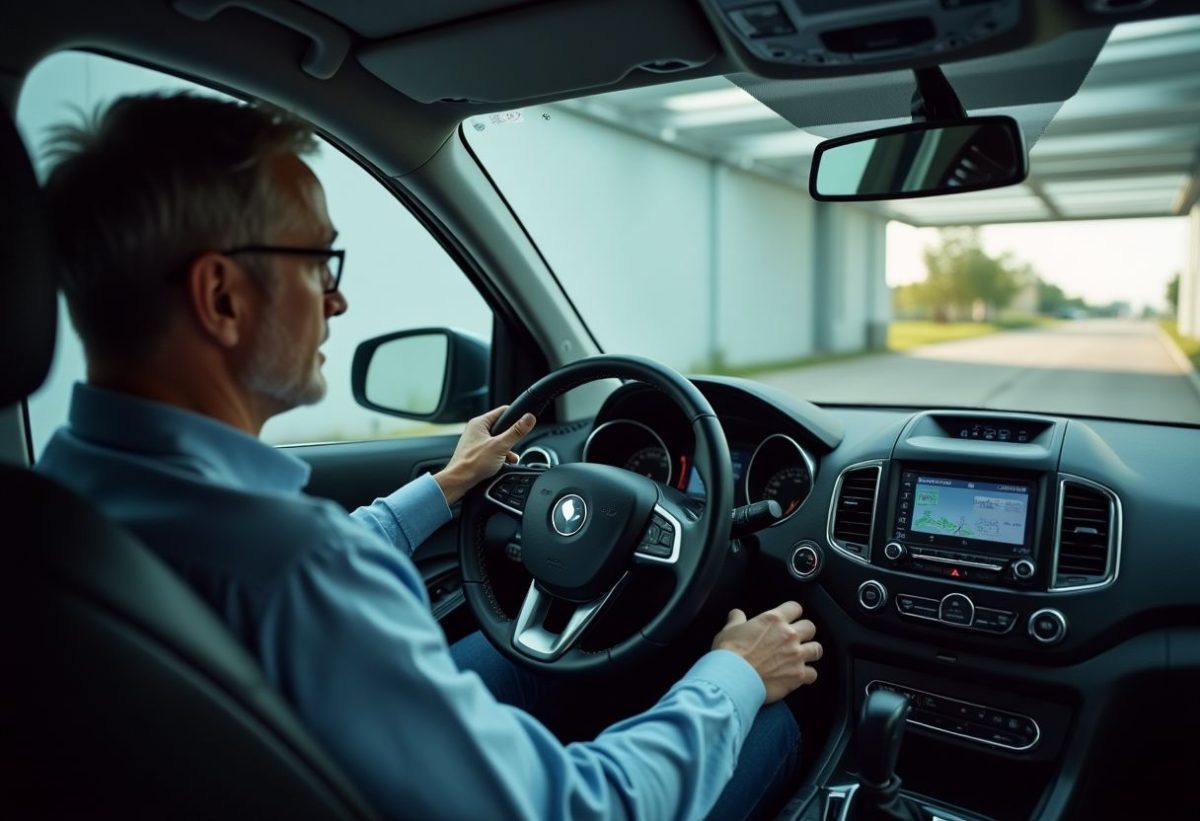
In the vast universe of driving, safety is a fundamental prerequisite. Drivers are therefore subjected to various checks to ensure they do not pose a danger to themselves and others. Among these essential evaluations, the driving psychometric test stands out for its determining role in analyzing the cognitive and behavioral abilities of drivers. Whether to recover a suspended license or for other administrative reasons, this test often proves to be a mandatory step, fascinating in its criteria and methods. But why is it so essential and how is it conducted? Let’s explore together this often-overlooked but incredibly important examination for all aspiring drivers on the roads of France.
A necessity for road safety
The roads are the daily stage for thousands of journeys, and their safety is paramount. The driving psychometric test allows for the evaluation of drivers’ reflexes, concentration, and stress management.
- Cognitive evaluation: Cognitive abilities such as memory, perception, and selective attention are put to the test. These functions are crucial for anticipating and reacting appropriately to unforeseen situations on the road.
- Reaction to stimuli: This test also analyzes the speed of the driver’s reflexes. Optimal reactivity is essential to avoid accidents and effectively adapt to sudden changes in traffic.
- Stress management: Driving often generates stress, and the ability to manage it can influence the driver’s behavior. The test includes simulated situations to assess emotional responses under pressure.
The different stages of the psychometric test
Understanding the process of the driving psychometric test allows for better preparation. This multi-step process ensures a comprehensive and objective evaluation.
- Individual interview: A first exchange with a licensed psychologist helps to understand the candidate’s profile. This interview provides the specialist with insights into the driver’s background and any potential history.
- Computerized tests: Candidates then proceed to computer-assisted tests. These measure various aspects, such as reaction speed, hand-eye coordination, and sustained attention.
- Results evaluation: At the end of the tests, an analysis of the results is conducted by the psychologist. The goal is to determine whether the driver possesses the necessary skills for safe driving.
When and why take this test?
Several circumstances require drivers to undergo the driving psychometric test. The reasons behind this requirement are diverse and often related to restrictions on the right to drive.
After a license suspension, for example, the test is often required to assess whether the driver can recover their license and return to the road safely. Drivers who have lost all their license points are also affected. Their return to driving necessitates a thorough verification of their abilities.
For professional drivers, the test may be a legal requirement, ensuring that their ability to drive remains impeccable, even under stress or fatigue.
Finally, individuals suffering from certain medical conditions requiring monitoring must also undergo this evaluation to ensure that their health status does not compromise road safety.
How to prepare effectively?
Preparation for the driving psychometric test is essential to maximize chances of success. Here are some tips that might be useful.
- Rest and concentration: Getting a good night’s sleep before the test is fundamental. This allows for approaching the tests in the best mental and physical conditions.
- Cognitive exercises: There are tools and applications that help improve reflexes and concentration. Regular training can make a real difference during the test.
- Stress management: Learning to manage stress is an asset. Relaxation or breathing techniques can be beneficial on the day of the test.