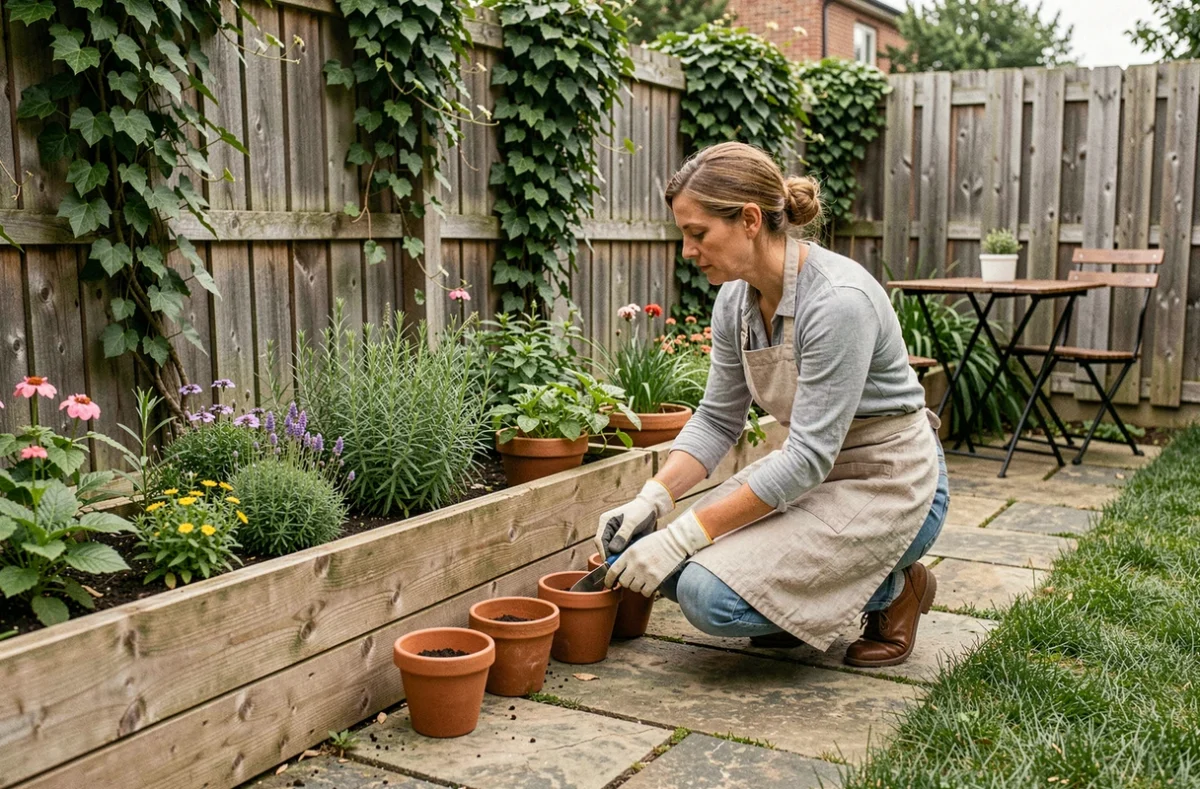
A well-functioning garden relies less on decoration and more on soil and water management. Designing a garden is primarily about balancing impermeable surfaces and open ground areas, choosing drought-resistant plants, and organizing circulation without paving every path. These choices affect future maintenance, resilience to heatwaves, and even the regulatory compliance of your outdoor space.
Deimpermeabilize the soil before thinking about planting
You may have noticed that after heavy rain, water stagnates on a paved terrace but disappears within minutes on a gravel area? This phenomenon illustrates a central issue in outdoor landscaping today.
The ZAN (zero net artificialization) objective and the European regulation on nature restoration, which came into effect in 2024, emphasize the importance of preserving open ground areas rather than multiplying hard surfaces. Every square meter of permeable soil retained absorbs rainwater, nourishes microbial life, and regulates soil temperature during heat episodes.
Before adding a terrace or a path, ask yourself: does this surface really need to be impermeable? A stepping stone path, a stabilized gravel surface, or grassed joint slabs serve the same circulation function while allowing water to infiltrate. For more in-depth reflection on this type of consideration, you will find garden tips on L’Herbe sous le Pied detailing how to optimize an outdoor space without sacrificing open ground.
In practical terms, outline on a plan the portion of hard surface (terrace, shelter, main path) and aim to keep it as small as possible. The rest of the garden benefits from remaining living soil, even if it means giving up a second terrace or a paved path.
Drought-resistant plants: adapting the garden to the real climate
Choosing plants based on the aesthetics of a catalog often leads to failures after the first hot summer. Landscape designers are now turning to a so-called “waterless” garden, documented by several specialized media in response to recurring droughts.
The principle is simple: replace water-hungry species with Mediterranean or drought-resistant plants. Lavenders, shrubby sages, ornamental grasses, yarrow, or euphorbias can withstand weeks without watering once well-rooted.
The deep rooting technique
During the first two years after planting, abundant but spaced watering encourages roots to go deep in search of moisture. Daily shallow watering produces the opposite effect: roots remain on the surface and the plant becomes dependent.
Apply this method to each new shrub or perennial. A good organic mulch (wood chips, fallen leaves) complements the system by limiting evaporation and protecting soil life.
- Water generously once a week rather than a little each day, especially during the first year of planting.
- Mulch to a sufficient depth to keep the soil cool, avoiding synthetic fabrics that prevent exchanges with the soil.
- Reduce the area of traditional lawn, which is the most water-consuming part of a garden, in favor of resilient ground covers like creeping thyme or dwarf clover.
This choice of plants does not reduce visual diversity. A bed of grasses mixed with sages and gaura offers movement, colors spread over several months, and a texture that uniform lawn cannot provide.
Rainwater harvesting: what the regulations really allow
Installing a rainwater collector seems obvious for watering the garden. However, the decree of July 12, 2024, precisely regulates uses, and some common uses remain prohibited.
Outdoor watering and cleaning are allowed, which covers most of a garden’s needs. Indoor uses require specific precautions (separate circuit, signage). Drinking, cooking, and personal hygiene with harvested rainwater are strictly prohibited.
Size the tank according to actual use
Why is this point so often overlooked? Because the temptation is to buy the largest tank possible without calculating the actual need. For a modest-sized garden, a tank of a few hundred liters is sufficient to cover summer watering if you have chosen low-maintenance plants.
Place the tank at the lowest point of the nearest downspout to the area to be watered. A filter at the entrance prevents leaves and debris from contaminating the water. Ensure that your installation respects the strict separation between the drinking water network and the rainwater circuit, a regulatory obligation whose non-compliance can lead to penalties.
Organizing the outdoor space without replicating an indoor plan
A common reflex is to divide the garden into “rooms”: dining area, relaxation area, play area. This indoor plan replica works poorly outdoors because it freezes usage and multiplies artificial separations.
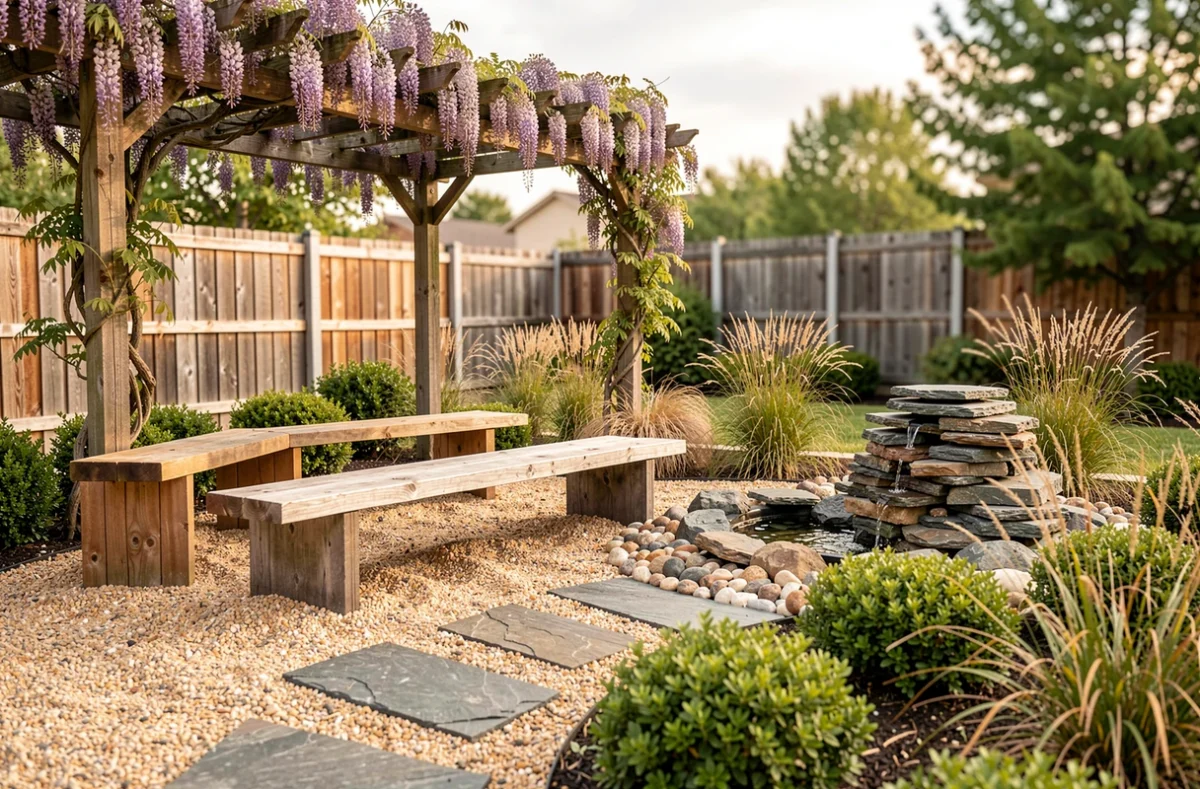
A well-designed garden relies on gentle transitions rather than partitions. A change in flooring (gravel to lawn, slabs to mulch) is enough to suggest a change in use without walls or screens.
Furniture also plays a structuring role. A table positioned in the shade of an existing tree avoids the need to build a pergola. A bench backed against a low wall replaces a formal resting area. Each piece of furniture placed according to the sun, wind, and existing view creates a functional space without heavy work.
- Observe your garden at different times of the day before fixing the furniture’s location: the shade moves, the wind shifts.
- Prefer wood or natural materials for outdoor furniture, which patina over time instead of visually degrading.
- Leave “empty” areas, without specific allocation: an open space in the center of the garden visually enlarges the whole.
A final often-forgotten point: accepting a certain level of plant disorder fosters biodiversity. A partially wild area of the garden, even small, attracts pollinators and beneficials much more effectively than a neatly trimmed bed. The most optimized garden is not the most orderly; it is the one that requires the least intervention to remain alive and pleasant.