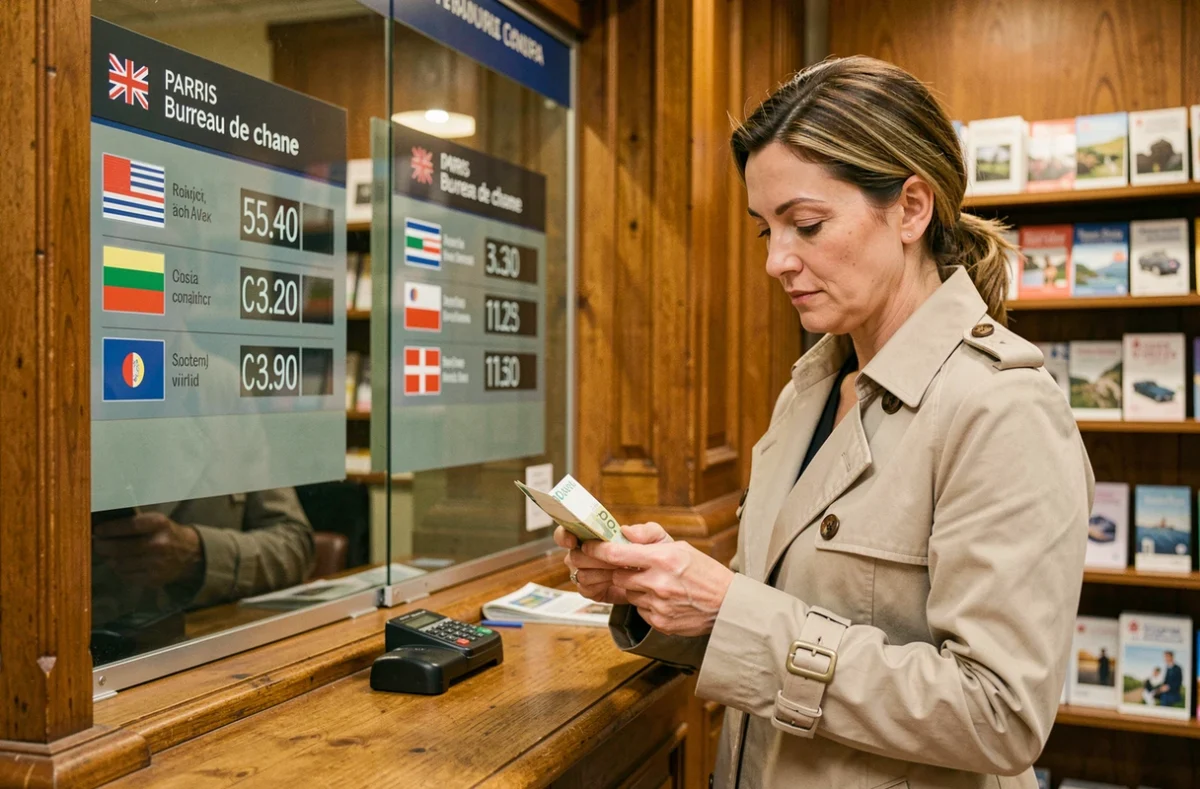
Exchanging euros for foreign currencies in Paris is not just about walking into the nearest currency exchange office near Gare du Nord. The differences in rates between two addresses just a few hundred meters apart can represent several dozen euros on a typical transaction.
The Parisian manual exchange market remains dense but opaque: commissions displayed or not, rates updated in real-time or frozen in the morning, uneven currency stocks depending on the brands.
Identity obligation and customs declaration thresholds
Before comparing rates, a regulatory point conditions any currency exchange operation in France. Presentation of an identity document is required at the counter, even for a regular currency purchase. This requirement stems from French anti-money laundering rules and applies regardless of the amount.
For travelers carrying cash or foreign currencies, the framework becomes stricter beyond a certain threshold. Transporting at least 10,000 euros in cash must be declared to customs when entering or exiting the European Union. This threshold is assessed at the level of a “community of interest” (a couple traveling together, for example). From 50,000 euros, proof of the source of funds may be required.
Knowing where to exchange money in Paris therefore implies checking in advance the necessary documents, or risk having the operation refused or delayed at the counter.
Currency exchange offices in Paris: what the displayed rate doesn’t tell you
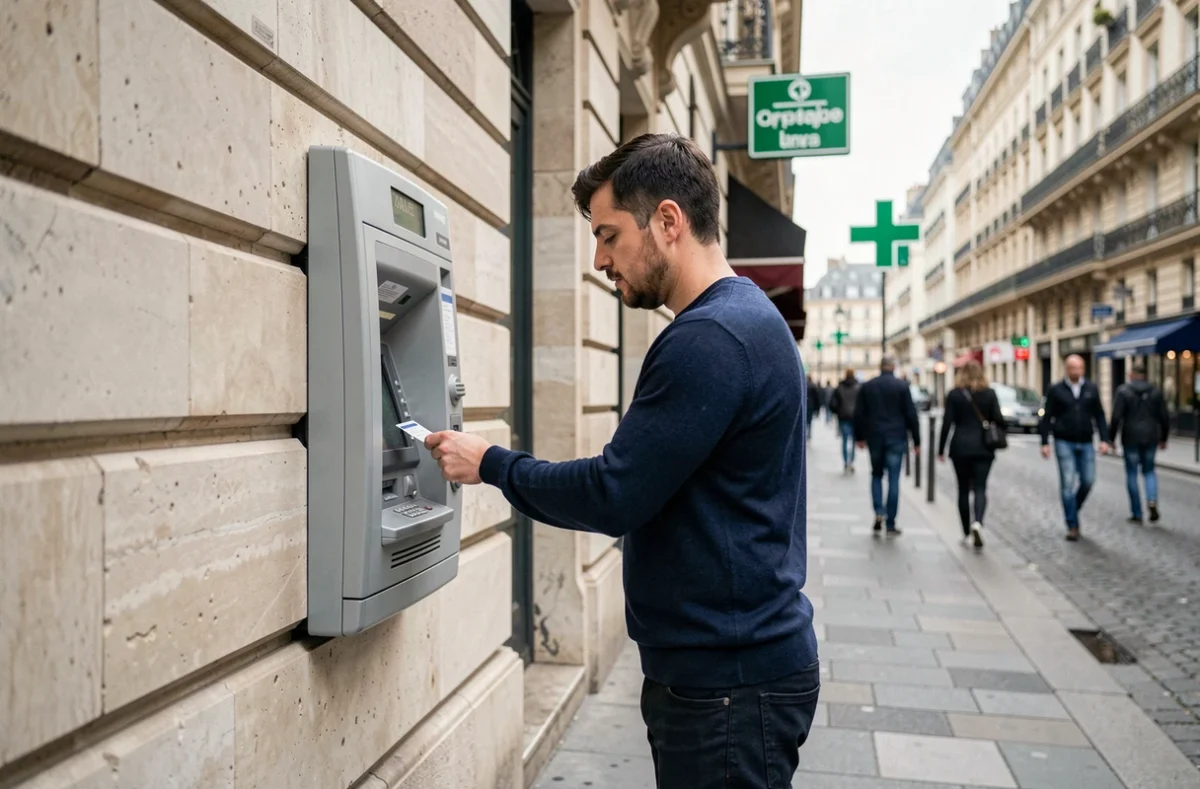
Most Parisian currency exchange offices display two columns: a buying rate and a selling rate. The difference between the two, called the spread, constitutes their main margin. An office that advertises “0% commission” generally compensates with a wider spread.
To assess the actual competitiveness of an office, the most reliable method is to compare the offered rate to the day’s interbank rate, which can be checked on public financial websites. The closer the displayed rate is to the interbank rate, the more advantageous the transaction.
Historic brands and concentration areas
We Change Beaubourg, located in the Marais and near Châtelet, offers an online reservation service with a temporary rate guarantee for 24 hours, allowing you to lock in a rate before traveling. Espace Gold Change also has several agencies in Paris.
Tourist areas (Opera, Champs-Élysées, train stations) concentrate the largest number of counters, but the rates there are rarely the most competitive. Offices located slightly away from these areas often display tighter margins, although this is not an absolute rule.
Currency availability: a blind spot for comparators
Online guides compare rates for major currencies (US dollar, British pound, Swiss franc, Japanese yen). However, the actual availability of currencies varies according to the stocks of each office, including for frequently requested currencies like the Moroccan dirham or the Canadian dollar.
We Change Beaubourg, for example, recommends calling or messaging via WhatsApp when a currency does not appear in its online catalog. This “on-demand” operation concerns a significant portion of the currencies offered, which requires anticipating.
- For major currencies (USD, GBP, CHF, JPY), most Parisian offices have permanent stocks and rates are updated several times a day.
- For secondary currencies (dirham, Saudi riyal, Chinese yuan, Tunisian dinar), it is advisable to reserve the day before or confirm availability by phone.
- For rare or less demanded currencies, an ordering delay of one to several days is common, making rate comparison less relevant than the office’s ability to provide the currency on time.
Multi-currency card or exchange office: arbitration based on the amount
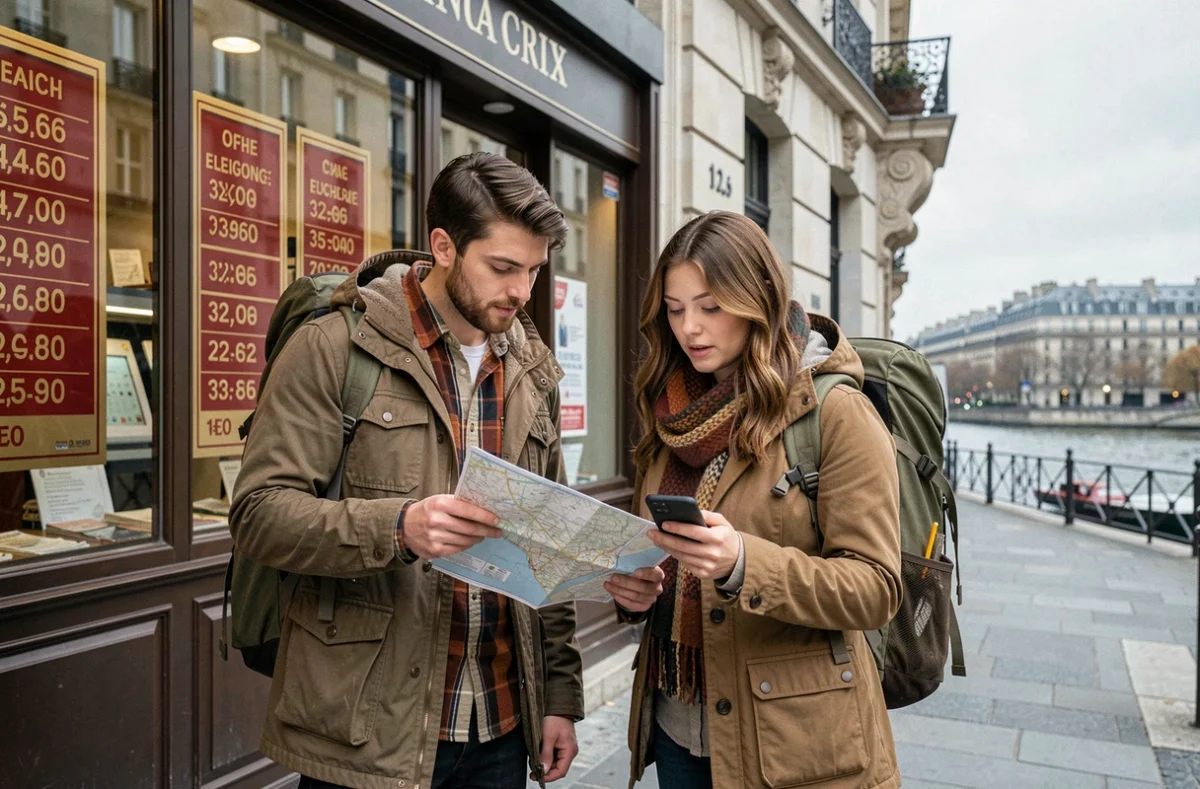
Currency exchange offices are not always the cheapest option for small amounts. Multi-currency cards (Revolut, Wise, and other players) apply the interbank rate or a very close rate, with reduced fees for payments abroad.
The choice depends on the usage profile:
- For a modest amount intended to cover everyday expenses while traveling, a multi-currency card avoids fixed fees and the need for physical travel.
- For a larger sum (several hundred or thousands of euros), a well-positioned Parisian exchange office can offer a negotiated rate at the counter, especially if the transaction is prepared in advance.
- For currencies that the cards do not cover or for countries where cash payment remains dominant, going to an office remains the only realistic option.
Comparing the day’s interbank rate to the rate offered by the office remains the most direct method to decide. The acceptable gap depends on the currency and the amount, but beyond two to three percentage points of margin, it is worth looking for another address or a digital alternative.
Online reservation and rate guarantee: a still minority practice
The possibility of locking in a rate online before going to the counter remains rare among Parisian currency exchange offices. We Change Beaubourg stands out by guaranteeing the rate for 24 hours after reservation, according to information updated in September 2026 on their website.
This type of service reduces the risk of variation between the time of comparison online and the actual withdrawal. For volatile currencies or significant amounts, the temporary rate guarantee eliminates uncertainty related to intraday fluctuations.
Field feedback varies on this point: some offices indicate that they update their rates several times a day, which can work in favor or against the customer depending on the direction of the variation. Without a written guarantee, the rate displayed in the window or online at the time of the search does not bind the office at the time of checkout.
The currency exchange market in Paris remains a sector where transparency is slowly progressing. Checking the interbank rate, confirming the availability of the currency, and favoring offices that commit to a rate for a defined period are the three most effective reflexes to limit unpleasant surprises.