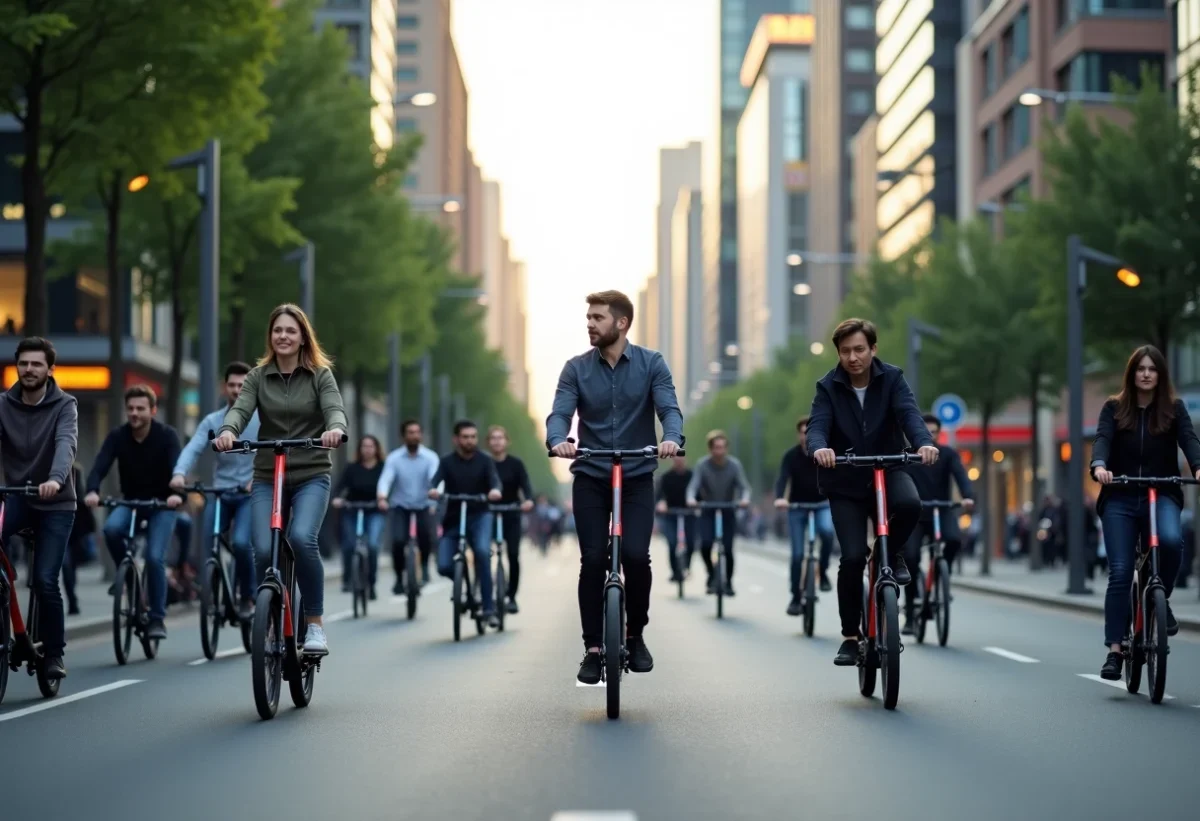
Cities are undergoing a radical transformation in the way residents move around. Endless traffic jams, pollution, and the stress of daily commutes have pushed urban dwellers and municipal authorities to rethink traditional modes of transport.
Innovative solutions such as electric bikes, shared scooters, and car-sharing are gaining popularity. These alternatives, often more eco-friendly and economical, meet a growing demand for more flexible and sustainable mobility. Urban infrastructures are also evolving to adapt to these new trends, thus promoting smoother and more environmentally friendly mobility.
New Modes of Transport: A Revolution in Progress
New urban mobility is reshaping the landscape of our cities. The Hyperloop, proposed by Elon Musk in 2013, is part of these groundbreaking innovations. On January 3, 2024, Arcelor Mittal announced a demonstrator in Madras, marking a significant advancement in high-speed transport. This enthusiasm for new transport technologies does not stop there.
Urbanloop: Towards Automated Mobility
Urbanloop, an automated personal transport system, is also generating strong interest. A demonstrator will be presented at the Paris 2024 Olympic Games in Saint-Quentin-en-Yvelines. This project has already attracted Nancy, which plans to implement a 3.5 km route by 2027. The vision intraparis nomade emerges, where each user can move fluidly and autonomously.
- Hyperloop: proposed by Elon Musk in 2013
- Urbanloop: demonstrator at the 2024 Olympics in Saint-Quentin-en-Yvelines
- Urbanloop: 3.5 km project in Nancy by 2027
Flying Taxis: A New Dimension
Flying taxis, developed by Ehang, add an additional dimension to urban mobility. Ehang has obtained the first certification for a two-seat electric flying vehicle, capable of traveling 30 km. A connection between Roissy CDG and Paris is proposed for the 2024 Olympic Games, symbolizing the rise of these new means of transport.
These innovations, driven by pioneering companies, outline the contours of reimagined urban mobility. The challenges are numerous, but so are the opportunities. 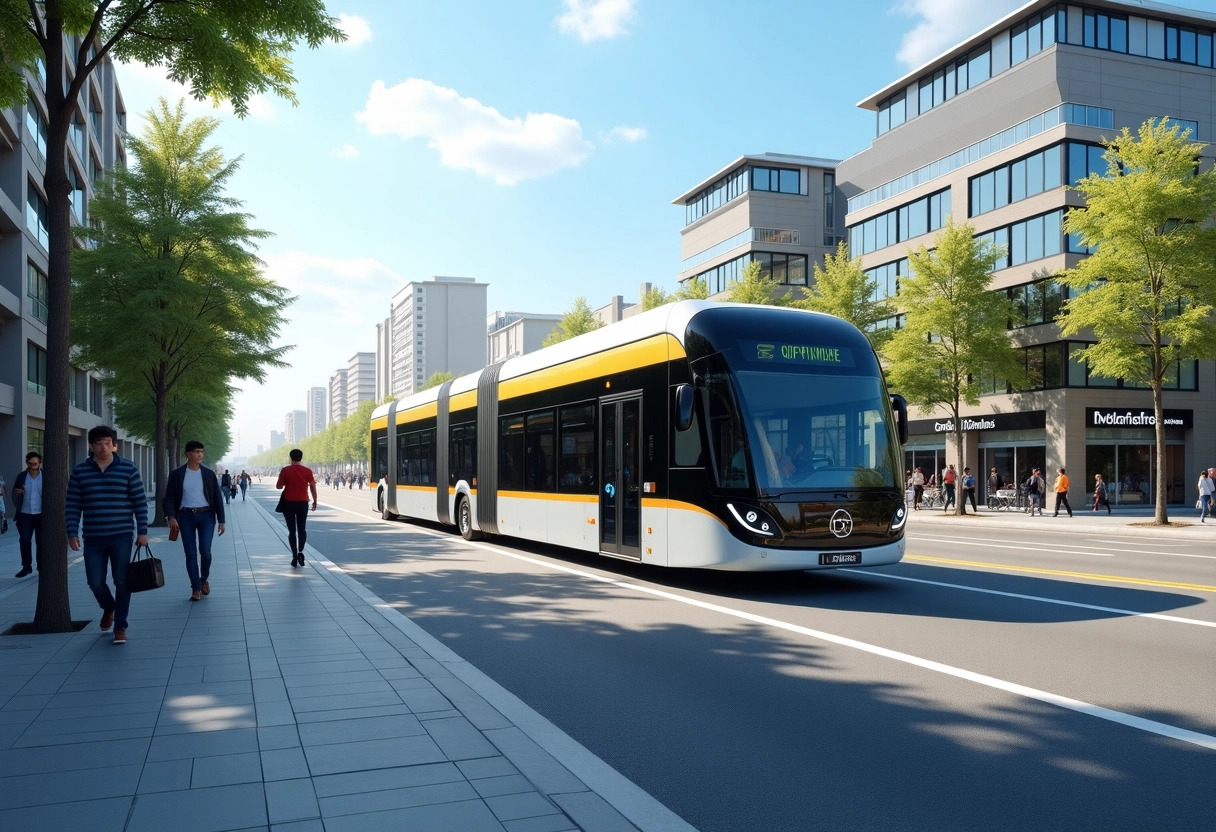
The Challenges and Opportunities of New Urban Mobilities
New urban mobilities open fascinating perspectives but also pose significant challenges. Regulating these innovations is essential to ensure their harmonious integration into our cities. The International Maritime Organization (IMO) plays a central role in regulating sailing transport. It oversees the reduction of CO2 emissions for maritime transport, a crucial initiative in the face of the climate emergency.
Grain de Sail, a pioneer in sailing transport since 2010, has developed the largest sailing cargo ship with a capacity of 350 tons. This eco-responsible mode of transport offers a sustainable alternative to traditional freight. In 2010, Grain de Sail innovated by shipping coffee and chocolate to Europe and the United States, demonstrating the viability of this model.
| Entity | Role |
|---|---|
| International Maritime Organization (IMO) | Regulates the reduction of CO2 emissions for maritime transport. |
| Grain de Sail | Developed the largest sailing cargo ship with a capacity of 350 tons. |
The urban challenges also include social acceptance and the adaptation of infrastructures. The development of individual electric vehicles (NVEI) and electric-assist bikes requires a reconfiguration of public space. The health crisis has accelerated this transition, highlighting the need for individual and flexible modes of transport.
Climate change intensifies the pressure for sustainable mobility solutions. New means of transport must be not only innovative but also environmentally friendly. Urban mobility stakeholders must adapt quickly and effectively to meet these challenges.
New urban mobilities offer opportunities to rethink our travel. They require rigorous regulation, infrastructure adaptation, and consideration of environmental imperatives.